
 Pin It
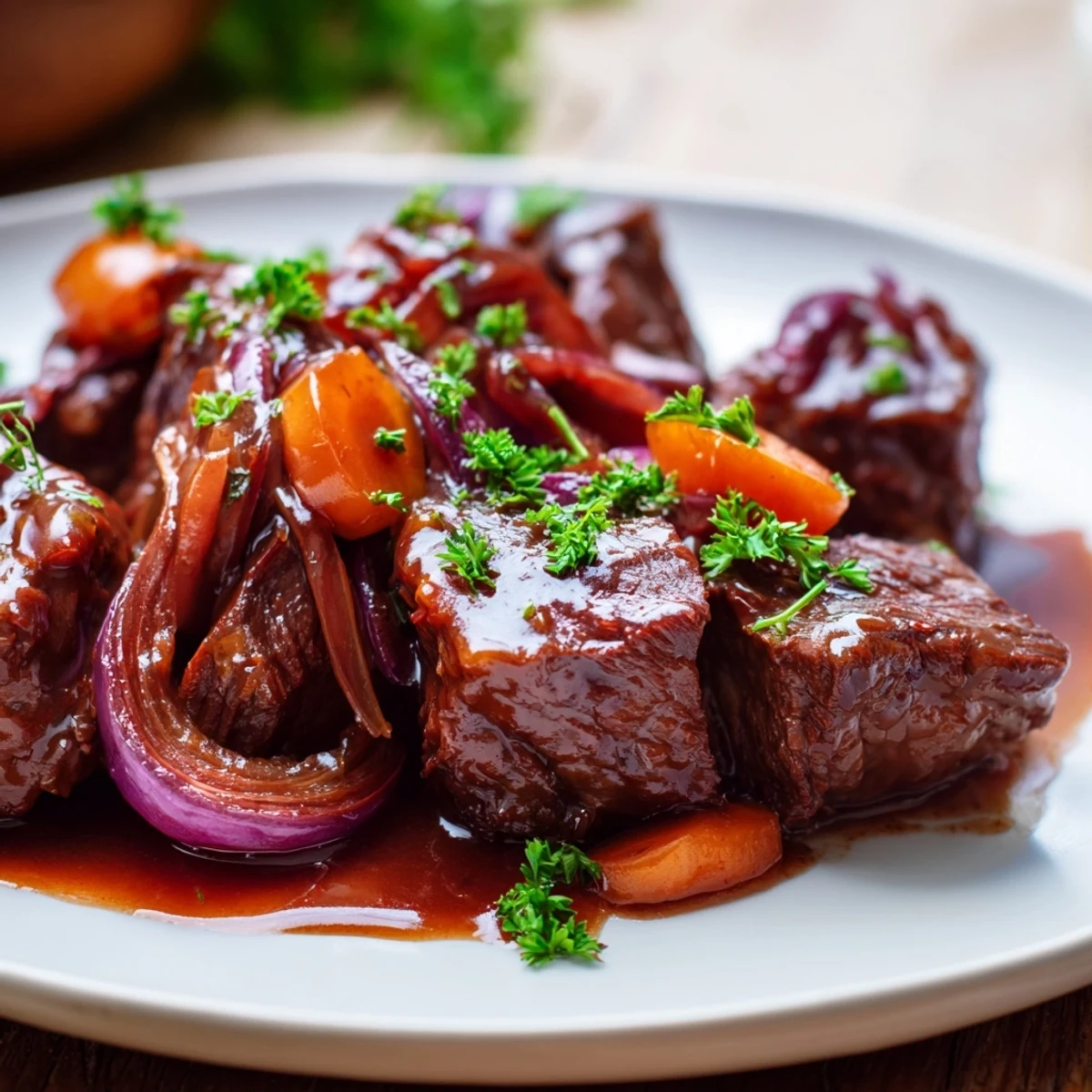
 This dish features beef chuck slow-cooked until tender alongside sweet red onions, garlic, and aromatic herbs. The addition of dry red wine and beef stock creates a rich, flavorful sauce that complements the meat's depth. Cooking low and slow in the oven results in a comforting, hearty main course perfect for pairing with creamy mashed potatoes or crusty bread. Fresh parsley garnish adds a bright finishing touch to the succulent braised beef.
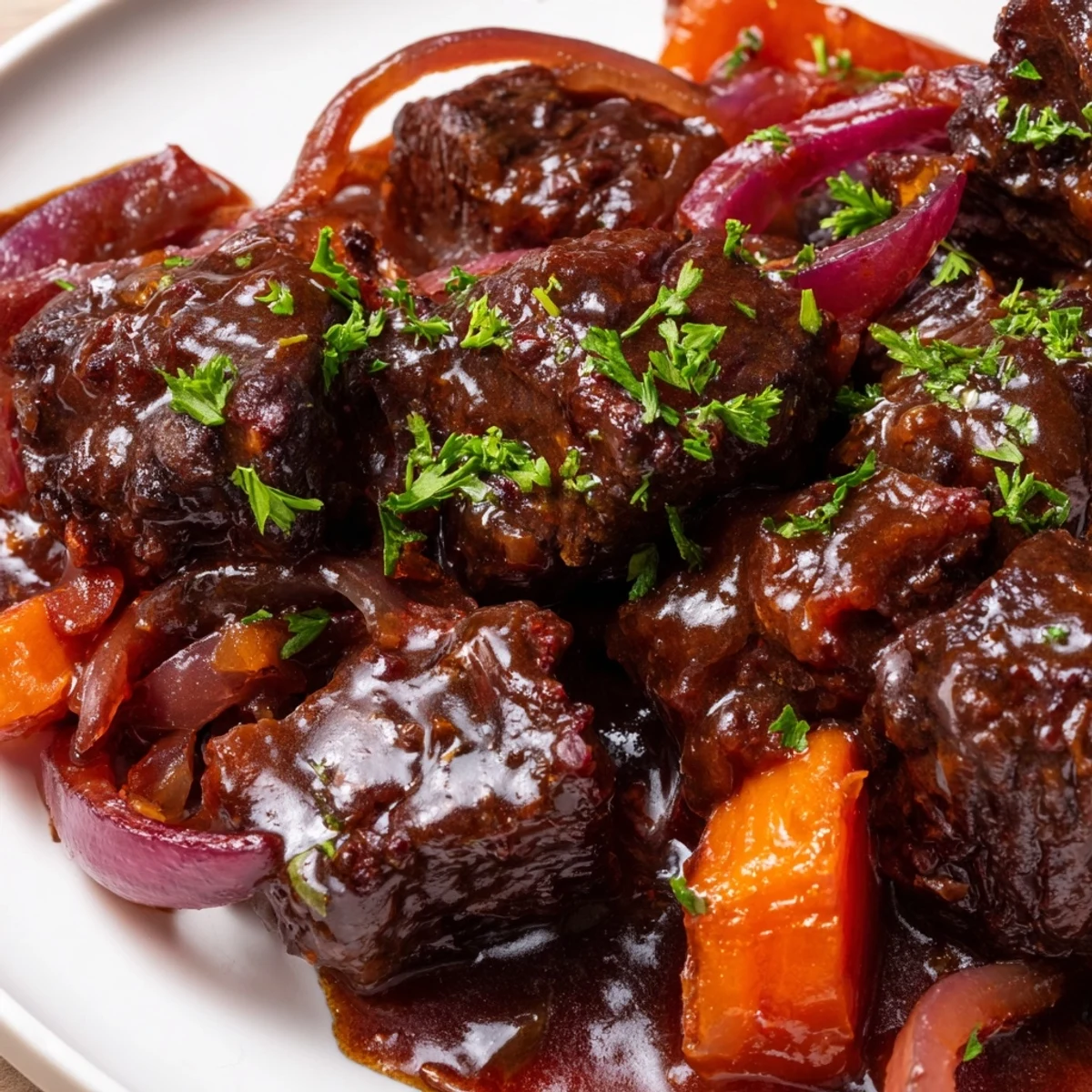
There's something almost meditative about the moment when a heavy Dutch oven lid comes off after hours in the oven, and a cloud of wine-dark steam hits your face. That's when I knew this beef chuck braise was going to be the kind of dish that turns an ordinary Tuesday into something worth remembering. The red onions had melted into the sauce, the meat fell apart at the gentlest prod, and suddenly the kitchen smelled like a French bistro that had been simmering since lunch.
I made this for my partner on a cold evening when neither of us felt like going out, and we ended up talking through dinner in a way we hadn't in months. There's something about a slow-cooked meal that invites that kind of lingering—you're not rushing, the food isn't rushing, and suddenly two hours have passed and you're still at the table.
Ingredients
- Beef chuck, 1.5 kg cut into large cubes: This cut is exactly where you want to be for braising—it has enough marbling and connective tissue that transforms into gelatin, making the sauce silky and the meat tender. Don't be tempted to use a leaner cut; the fattier parts are your friends here.
- Red onions, 3 large sliced: Unlike yellow onions, red ones add a subtle sweetness and turn a deep burgundy color as they cook down. They're not just a supporting player—they practically become the sauce.
- Garlic, 3 cloves minced: Mince it fine so it dissolves into the braising liquid rather than remaining as distinct pieces.
- Carrots and celery, 2 each: These are your flavor base, often called mirepoix in French cooking. They won't disappear completely but will soften and add body to the sauce.
- Dry red wine, 400 ml: Use something you'd actually drink—a simple Côtes du Rhône or Spanish red works perfectly. The wine reduces and its acidity cuts through the richness beautifully.
- Beef stock, 500 ml: Homemade is ideal, but a quality store-bought version matters more than pretending otherwise.
- Olive oil, 3 tbsp: High heat searing needs oil with a high smoke point, so don't skimp on quality here.
- Tomato paste, 2 tbsp: Just a small amount adds depth and helps thicken the sauce naturally as everything cooks.
- Bay leaves and thyme, 2 leaves and 4 sprigs: These are your aromatics—they infuse the whole pot with herbal notes that make the dish feel intentional and finished.
- Salt and pepper: Taste as you go, especially at the end; the flavors concentrate as liquid reduces.
- Fresh parsley, optional garnish: A small handful chopped right before serving adds brightness and color to an otherwise dark, rich braise.
Instructions
- Get your oven ready and prep the beef:
- Set your oven to 160°C and let it preheat while you pat the beef dry with paper towels—this step matters because dry meat sears better and browns more evenly. Season it generously with salt and pepper, almost more than feels right, because the seasoning will distribute through the whole pot.
- Sear the meat in batches:
- Heat olive oil until it shimmers, then add beef in a single layer, resisting the urge to move it around. Let each side develop a dark crust—this takes 3 to 4 minutes per side and creates layers of flavor that define the whole dish. Work in batches so the pot stays hot; crowding the pan just steams the meat instead.
- Build your flavor base with the vegetables:
- In the same pot with all those flavorful browned bits stuck to the bottom, add the sliced onions, carrots, and celery over medium heat. Let them soften for 8 to 10 minutes, stirring occasionally, until the onions start to turn translucent and caramelize slightly at the edges—you're building sweetness and depth here.
- Add garlic and tomato paste:
- Stir in the minced garlic and tomato paste, cooking for about 2 minutes until the kitchen smells intensely savory and aromatic. This brief cooking time allows the garlic to lose its raw edge while the tomato paste deepens and slightly caramelizes.
- Deglaze and return the beef:
- Pour in the red wine and use a wooden spoon to scrape up all those browned, flavorful bits from the bottom of the pot—the ones that taste like concentrated beef. Add the beef back in, then add the beef stock, bay leaves, and thyme sprigs, stirring gently.
- Transfer to the oven and braise low and slow:
- Once the liquid reaches a gentle simmer on the stovetop, cover the pot and slide it into the preheated oven for 2 to 2.5 hours. The low, even heat of the oven is what transforms tough chuck into something fork-tender; you'll know it's done when the meat breaks apart with barely any pressure.
- Finish and serve:
- Remove from the oven, fish out the bay leaves and thyme sprigs, and taste for seasoning—adjust with salt and pepper as needed. The sauce should coat the back of a spoon; if it seems thin, return it to the stovetop uncovered and simmer for 10 minutes to concentrate the flavors.
 Pin It
 A friend once asked me why I bothered spending so much time on something that was 'just a stew,' and I didn't have a good answer until she tasted it. That's when I realized this dish isn't just about feeding people—it's about showing them that you spent time thinking about their comfort, that you made space in your day for something slow and deliberate. That matters in ways that are hard to explain but easy to feel.
Why This Braise Works
Braising is one of those cooking methods that feels complicated but is actually the opposite—you're just combining ingredients in a pot, covering it, and letting heat and time do the work. The magic happens because the sealed environment traps steam, which keeps the meat moist while it tenderizes, and the liquid slowly absorbs the flavors of everything in the pot. It's almost impossible to mess up, which makes it perfect for a weeknight that turns into something special.
Serving and Pairing Ideas
This braise is at its best with something to soak up the sauce—creamy mashed potatoes are the obvious choice and they work beautifully, but polenta or even thick slices of toasted bread are equally good. The richness of the beef and sauce calls for a full-bodied red wine, something like a Cabernet Sauvignon or Merlot that matches the intensity of what's in the pot. A simple green salad on the side cuts through the richness and adds freshness without competing with the main event.
Variations and Swaps
Once you understand how this braise works, you can play with it confidently. Swap shallots for red onions if you want something more delicate, or add mushrooms and pearl onions in the last 30 minutes of cooking for extra texture and earthiness. Some cooks finish the pot with a knob of butter right before serving, which adds a silky richness that feels almost luxurious, and if you want to go deeper into French territory, a splash of brandy at the deglazing stage adds warmth and complexity.
- For a deeper, more complex flavor, add a splash of brandy or cognac when you deglaze with the wine.
- Pearl onions and mushrooms added in the last 30 minutes turn this into something even more restaurant-worthy without extra effort.
- Leftover braise keeps for 4 days in the refrigerator and actually improves as flavors meld, making it perfect for meal planning.
 Pin It
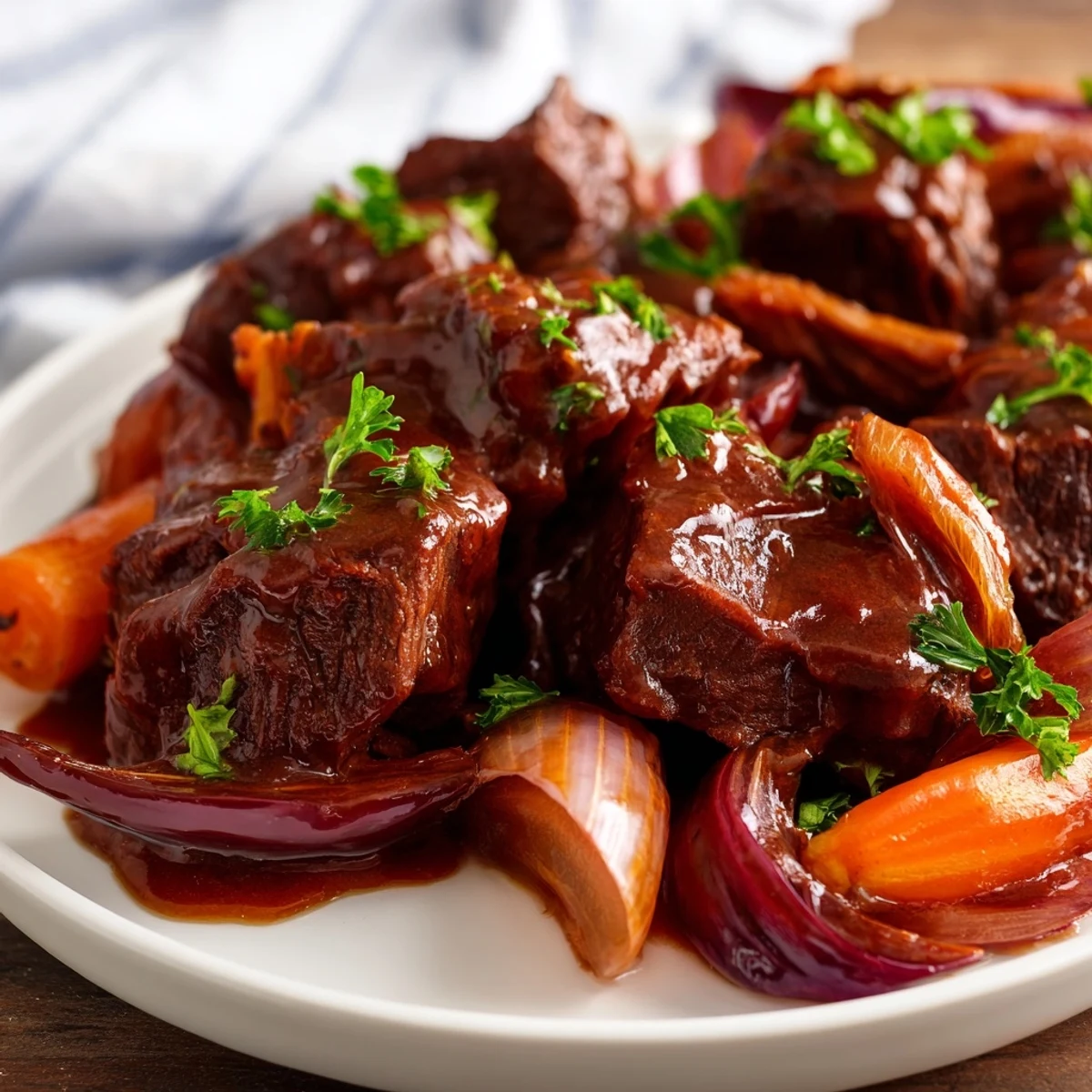
 This is the kind of dish that reminds you why you cook in the first place. It's generous, unpretentious, and tastes like care.
Recipe FAQs
- → What cut of beef is best for slow cooking?
-
Beef chuck is ideal due to its marbling and connective tissue, which break down during slow cooking to create tenderness and rich flavor.
- → How long should the beef be braised?
-
Braise the beef for about 2 to 2.5 hours until it becomes fork-tender and the flavors meld beautifully.
- → Can I substitute red onions with another ingredient?
-
Yes, shallots can be used for a milder, sweeter onion note without overpowering the dish.
- → Why is red wine added to the cooking liquid?
-
Red wine adds depth and acidity, balancing the richness of the beef and enhancing the sauce's complexity.
- → What sides pair well with this dish?
-
Creamy mashed potatoes, polenta, or crusty bread are excellent accompaniments to soak up the rich sauce.
- → Are there any tips for seasoning this dish?
-
Season the beef generously with salt and pepper before searing, and adjust seasoning after braising to achieve the best flavor balance.