
 Pin It
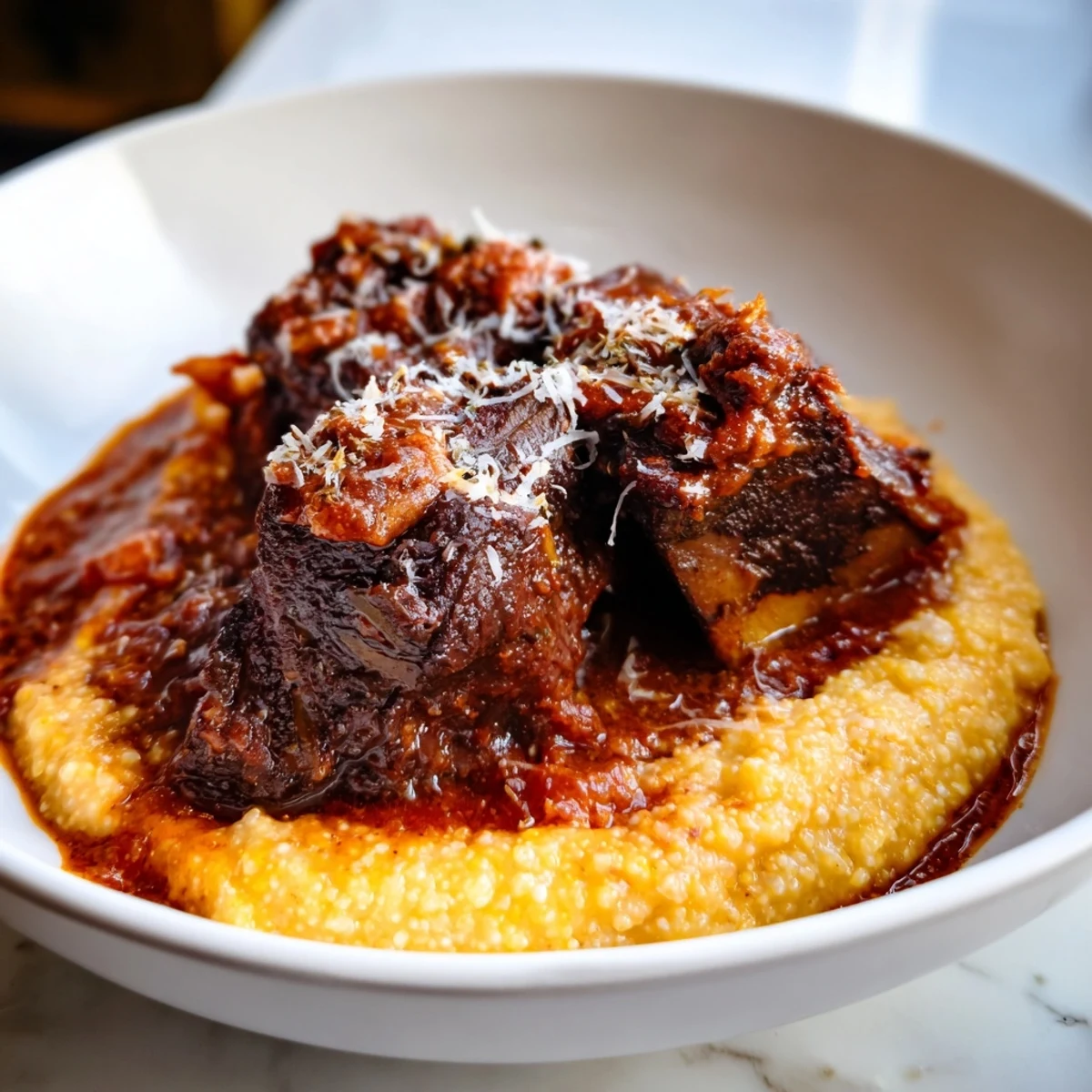
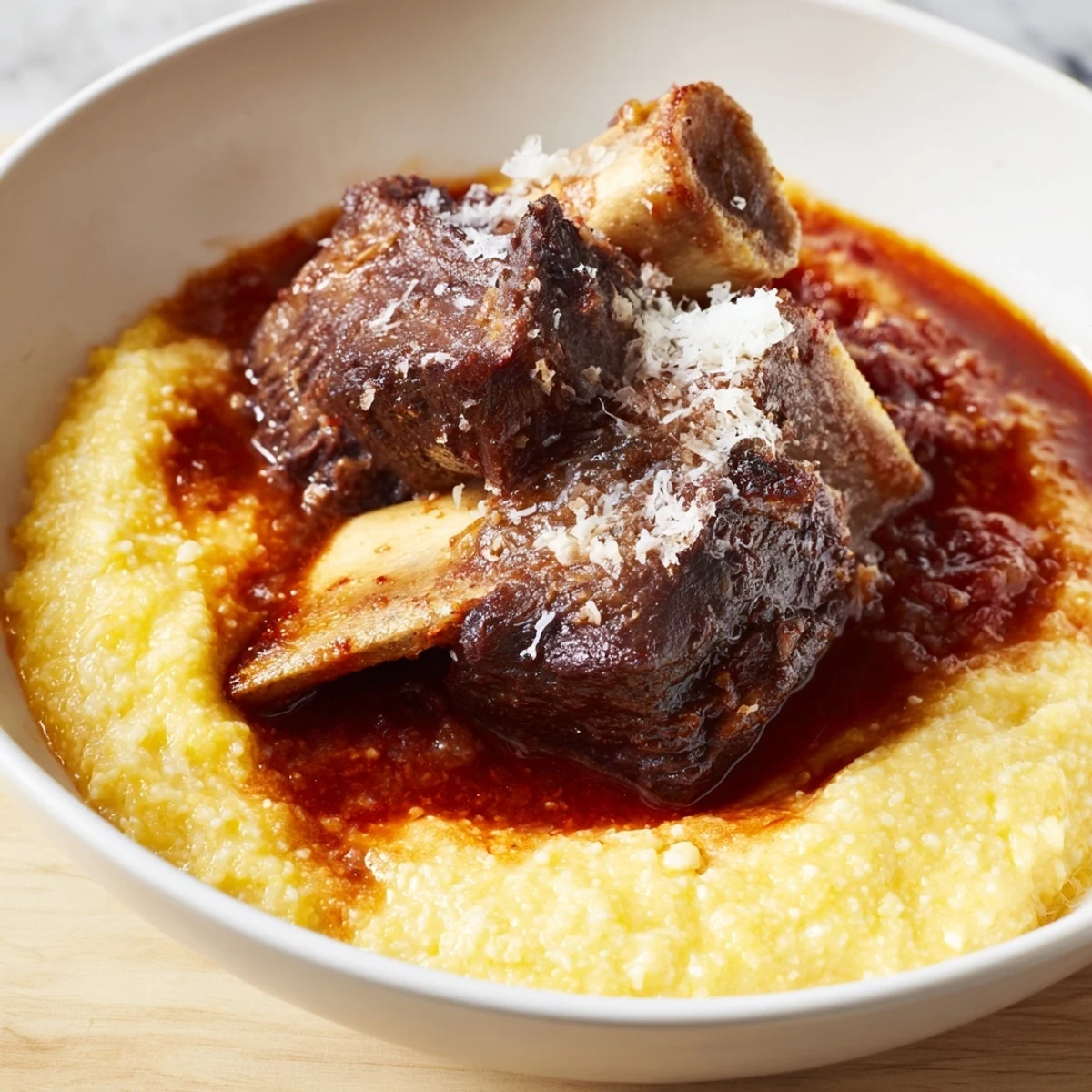
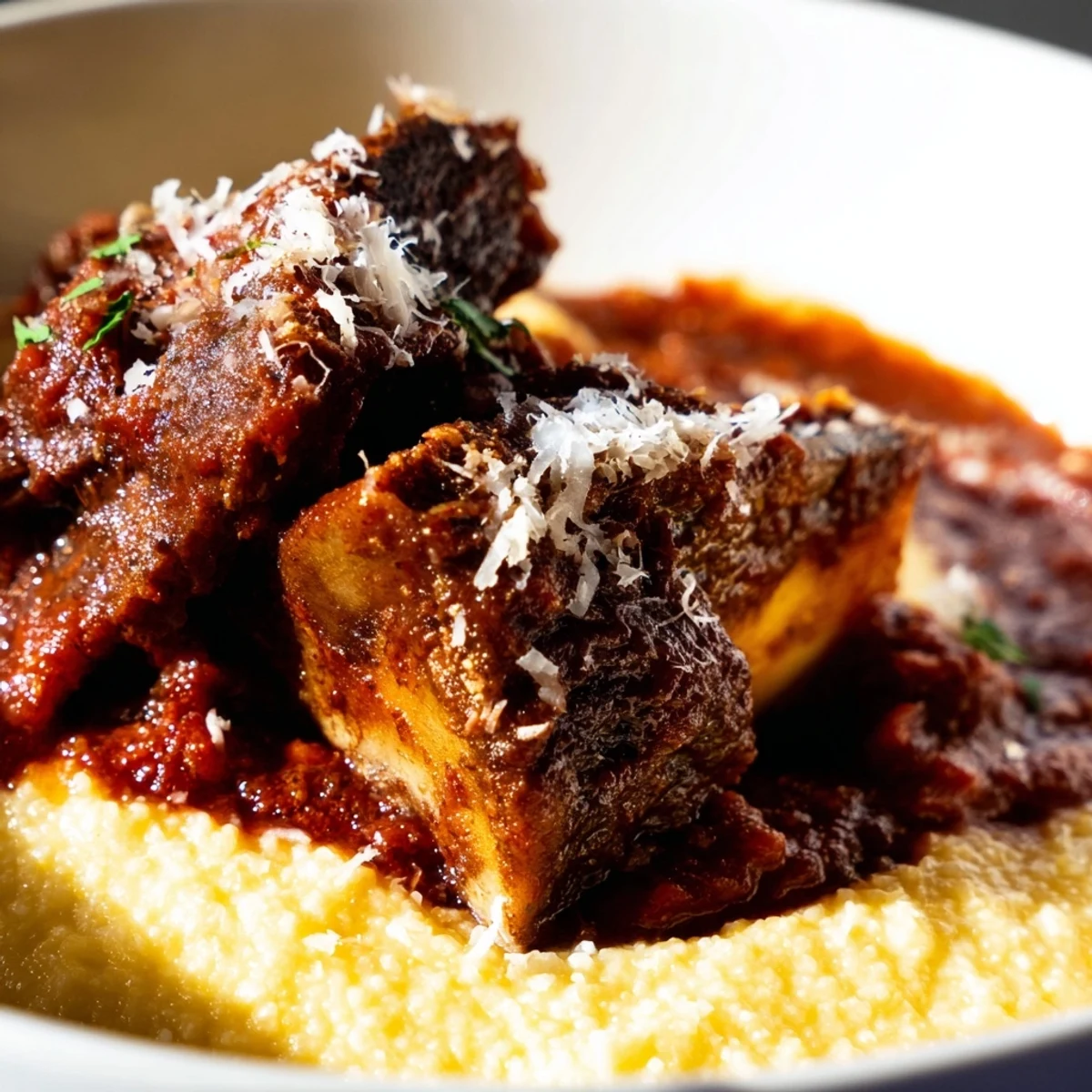
 This dish features tender beef short ribs slow-braised in a flavorful herb and red wine sauce until perfectly soft. The ribs rest atop velvety, creamy polenta enriched with butter, milk, and Parmesan for added richness. The combination creates a comforting balance of bold, savory meat and smooth, buttery cornmeal. Ideal for cozy dinners or special gatherings, it pairs beautifully with robust red wines. Cooking involves searing the ribs, simmering vegetables and aromatics, then slow oven braising before finishing the polenta separately. The sauce thickens from the braising liquid, adding depth to every bite.
There's a particular kind of quiet that fills the kitchen when something transformative is happening on the stove—the kind where you stop scrolling your phone and just listen to the gentle bubble of a braise. That's when I first understood why polenta and short ribs belonged together. A friend had made this for me years ago on a cold evening, and watching those meaty bones surrender to hours of gentle heat, then settling into clouds of butter and cream, felt like witnessing actual kitchen magic. I've made it countless times since, and it never stops feeling like an occasion.
I made this for my parents' anniversary dinner, and my mother actually set down her fork mid-bite to ask how long I'd been secretly training as a chef. The truth was simpler: I'd just learned to trust the process and respect the ingredients. That night, watching them close their eyes over each forkful, I realized this dish has a way of making people feel genuinely cared for.
Ingredients
- Beef short ribs (4 bone-in, about 1.5–2 lbs): Choose ones with good marbling and a decent amount of meat clinging to the bone—this is what becomes silky and tender after braising.
- Olive oil (2 tbsp): You'll use this to build a golden crust on the meat, which anchors all the flavor that follows.
- Onion, carrots, and celery (1 of each): These three create an aromatic foundation that keeps the braising liquid from tasting one-dimensional.
- Garlic (4 cloves, minced): Adds warmth and depth without overwhelming the meat's natural richness.
- Tomato paste (2 tbsp): A small amount here concentrates umami and darkens the sauce just enough to make it look luxurious.
- Dry red wine (1 cup): The acidity cuts through the richness and adds complexity—don't skip this or substitute with something too sweet.
- Beef broth (2 cups): Use good quality broth; it's the backbone of the braising liquid, so bland broth makes for a bland dish.
- Fresh rosemary and thyme (1 sprig each, plus 2 bay leaves): These gentle herbs perfume the entire pot without shouting for attention.
- Polenta (1 cup coarse cornmeal): The real magic happens when you whisk it slowly and patiently—rushing creates lumps that no amount of stirring fixes.
- Whole milk (1 cup): This softens the cornmeal into something luxurious and creamy.
- Butter (3 tbsp) and Parmesan cheese (½ cup): These finish the polenta with richness and a subtle salty bite that balances the savory ribs.
Instructions
- Set the stage:
- Preheat your oven to 325°F and pat the short ribs dry with paper towels—moisture is the enemy of browning. Season generously with salt and pepper, letting the seasoning sit for a moment so it clings properly.
- Build the crust:
- Heat olive oil in a Dutch oven over medium-high heat until it shimmers and smells almost nutty. Sear each rib on all sides for about 8–10 minutes total, working in batches if needed so you're not crowding the pot.
- Create the aromatics:
- In the same pot, add diced onion, carrots, and celery. Let them soften for 5–7 minutes until the edges turn golden, then add minced garlic and cook for just 1 minute more—you want fragrance, not browning.
- Deepen the flavor:
- Stir in tomato paste and let it sit in the hot oil for 2 minutes, which toasts it slightly and mellows its sharpness. Pour in red wine, scraping up every bronze bit stuck to the bottom of the pot, then simmer for 5 minutes.
- Begin the braise:
- Add beef broth, rosemary, thyme, and bay leaves, then nestle the ribs back in along with any juices that collected on the plate. The liquid should reach about three-quarters up the sides of the ribs.
- Let time do the work:
- Cover the pot and slide it into the oven for 2½–3 hours, checking occasionally that everything is gently simmering. The meat is ready when you can pull it apart with a wooden spoon.
- Make the polenta:
- About 30 minutes before the ribs are done, bring water to a boil in a separate saucepan. Slowly whisk in polenta in a steady stream, which prevents lumps, then reduce heat to low and stir constantly for 20–25 minutes until it's thick and creamy.
- Enrich and finish:
- Stir in milk, butter, and grated Parmesan, then taste and adjust seasoning with salt and pepper. The polenta should look like soft scrambled eggs, loose enough to flow onto a plate but sturdy enough to hold its shape.
- Complete the sauce:
- Remove the ribs from their braising liquid, discard the herb sprigs and bay leaves, then skim excess fat from the surface if you prefer. Simmer the sauce briefly if you want it thicker, or leave it as a silky, glossy coating.
 Pin It
 One evening, my roommate came home just as the braised ribs were coming out of the oven, and the smell was so unmistakably good that she immediately canceled her plans to eat out. We ended up sharing bowls of polenta and ribs while watching an old movie, and somehow that simple act of cooking something worth pausing for felt like the real luxury. That's what this dish does—it transforms a regular night into something worth remembering.
Why This Dish Feels Special
Polenta and braised short ribs represent two opposite cooking philosophies that somehow merge into something perfect. The polenta is about patience and constant attention—you can't rush it or ignore it—while the braise is about surrender and trusting that time will do what your hands cannot. Together, they create a meal that feels both humble and refined, the kind of thing you make for people you genuinely want to impress.
Flavor Foundations That Matter
The beauty of this dish lies in how the braising liquid becomes more delicious as it cooks. The red wine loses its harsh edge and becomes mellow, the tomato paste melts into the background adding only sweetness and depth, and the herbs infuse everything with an almost imperceptible elegance. By the time the ribs are ready, the sauce doesn't taste like individual ingredients anymore—it tastes like comfort itself.
Making It Your Own
This recipe is forgiving enough to bend slightly depending on what you have on hand or what you're craving that evening. Some nights I add a splash of cream to the polenta for extra indulgence, while other times I finish the sauce with a tiny knob of cold butter whisked in at the end for glossiness. The core technique stays constant, which is what makes it reliable enough to cook again and again.
- If you prefer a sharper cheese note, swap Parmesan for Pecorino Romano in the polenta.
- Serve alongside steamed broccolini or a peppery green salad to cut through the richness.
- A robust red wine like Barolo or Cabernet Sauvignon pairs beautifully with this meal and can even be the wine you braise with.
 Pin It
 This is the kind of recipe that rewards you for showing up and paying attention. Make it once and it becomes yours, a dish you'll return to whenever you want to feel like you've given someone something real.
Recipe FAQs
- → How do I know when the beef short ribs are done?
-
They’re ready when the meat is tender and easily falls off the bone after slow braising, usually after 2½ to 3 hours in the oven.
- → Can I prepare the polenta ahead of time?
-
Yes, polenta can be cooked in advance and gently reheated with a splash of milk or water while stirring to maintain its creamy texture.
- → What wine is best for braising the beef?
-
A dry red wine like Barolo or Cabernet Sauvignon complements the rich flavors, enriching the braising liquid and sauce.
- → How can I adjust the polenta’s creaminess?
-
Stirring in extra milk or a splash of cream at the end of cooking enhances the polenta’s richness and smoothness.
- → Are there good side dishes to serve with this dish?
-
Steamed greens such as broccolini or a crisp salad provide fresh contrast to the hearty meat and polenta.