
 Pin It
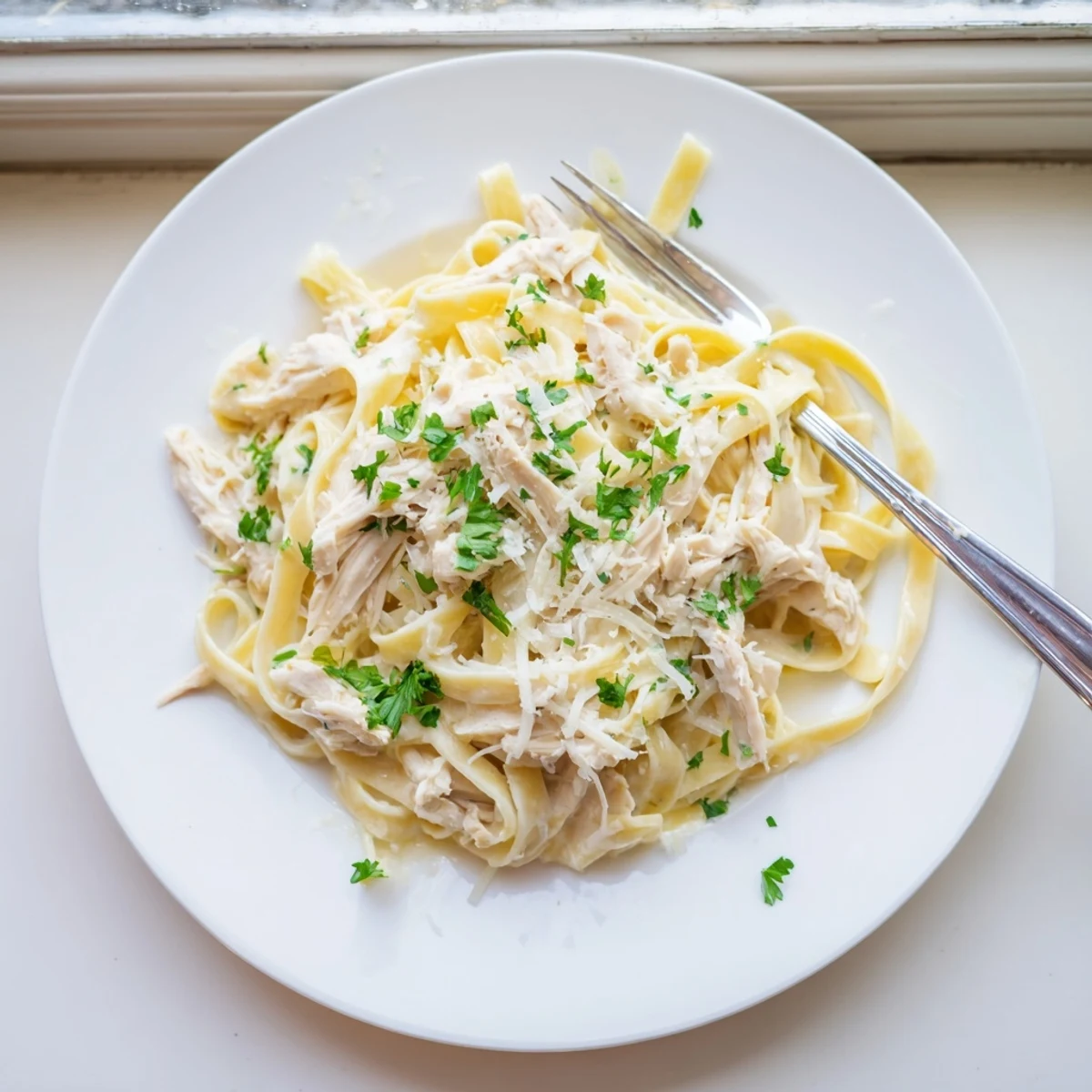
 This Italian-American comfort classic transforms your slow cooker into a vessel for velvety richness. Boneless chicken breasts simmer gently in heavy cream, chicken broth, and aromatics for four hours, becoming incredibly tender. After shredding, uncooked fettuccine joins the creamy broth, absorbing all those savory flavors while cooking directly in the sauce.
The magic happens as cream cheese, butter, and freshly grated Parmesan melt together, creating that signature silky texture. A pinch of crushed red pepper offers subtle warmth, while fresh parsley brightens each serving.
What makes this approach special is how the pasta cooks right in the sauce—no boiling separately, no extra pots. The starch naturally thickens the cream mixture, resulting in that restaurant-quality coating that clings to every strand of fettuccine.
The rainy Tuesday I first threw this together still makes me smile. I had forgotten to thaw anything and was staring at a slow cooker I rarely used, thinking some cream and chicken might at least be edible. That night my roommate kept wandering into the kitchen asking what smelled so good, and by dinner we were literally scraping the bowl.
Last winter my sister came over after a terrible day at work, and I told her to just sit down while I dished up bowls of this. She took one bite and got quiet, then said this tastes like something from a restaurant, and we ended up talking for two hours over empty bowls. Sometimes food really does fix everything.
Ingredients
- Chicken breasts: Boneless and skinless works best here, and I pound them slightly so they cook evenly
- Onion and garlic: These melt into the sauce and give that subtle aromatic background
- Heavy cream: This is what creates that luscious, restaurant-style consistency
- Parmesan cheese: Freshly grated is absolutely worth the extra effort
- Cream cheese: The secret ingredient that makes the sauce velvety and cling to every noodle
- Butter: Adds that final touch of richness and glossiness
- Fettuccine: I use regular but any sturdy pasta works wonderfully
- Salt, pepper, Italian herbs: Simple seasonings that let the dairy shine
- Red pepper flakes: Optional but nice if you want a tiny warmth in the background
- Chicken broth: Low-sodium keeps you in control of the salt level
- Fresh parsley: Brings a bright pop of color and freshness to the rich dish
Instructions
- Season the chicken:
- Rub the chicken with salt, pepper and Italian herbs, then lay it in the bottom of your slow cooker
- Add aromatics and liquids:
- Scatter the onion and garlic over the chicken, then pour in the broth and cream
- Add the creamy elements:
- Drop in the cream cheese cubes and dot the surface with butter
- Slow cook to perfection:
- Cover and cook on low for 4 hours until the chicken is incredibly tender
- Shred the chicken:
- Lift out the chicken and use two forks to shred it, then return it to the sauce
- Add the pasta:
- Stir in the uncooked fettuccine, pushing it down so it gets submerged in the liquid
- Finish with Parmesan:
- Sprinkle in the grated cheese and stir everything together
- Cook until done:
- Cover and cook on high for 25 to 35 minutes, stirring once or twice, until pasta is tender
- Serve immediately:
- Dish into bowls and top with fresh parsley for a beautiful finish
 Pin It
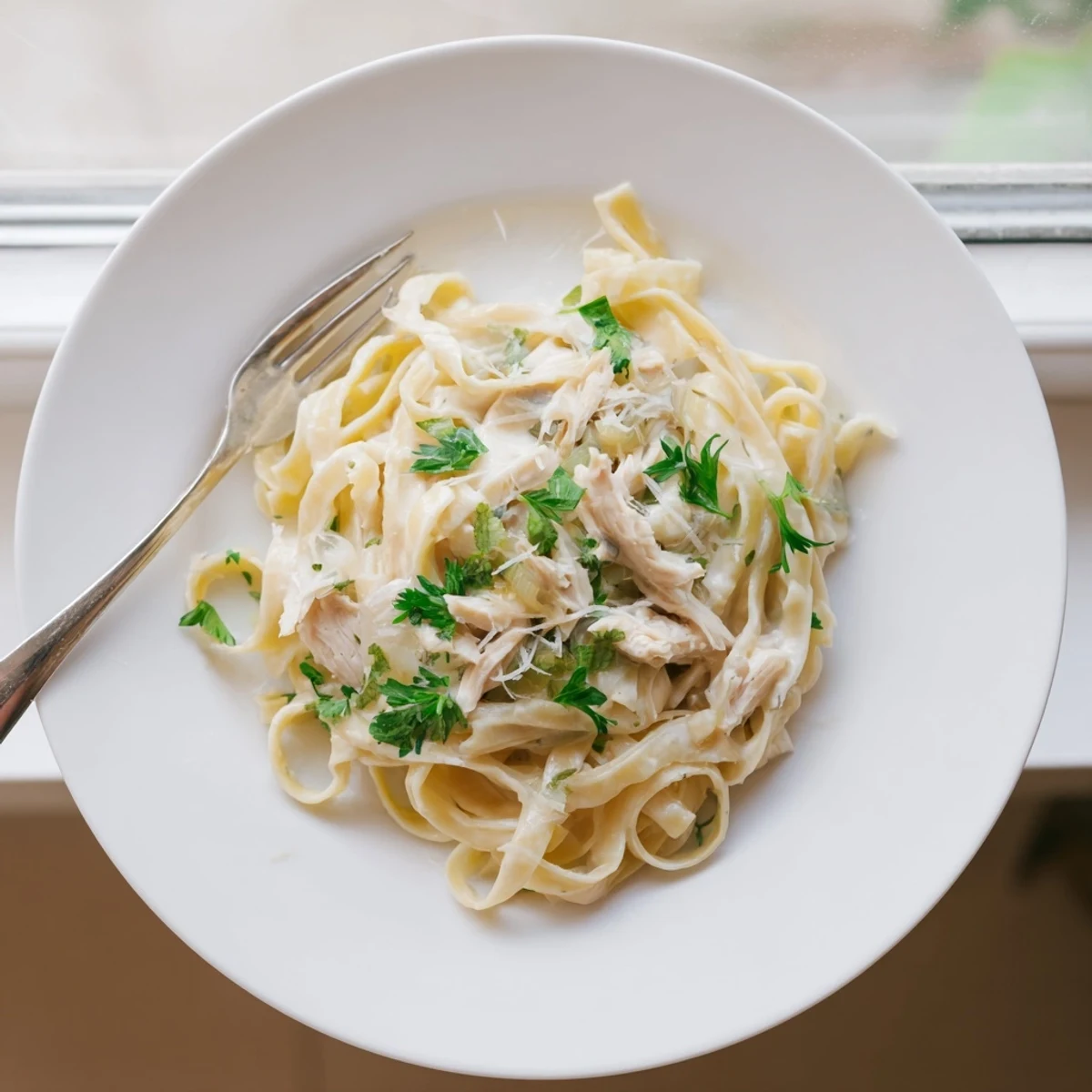
 My daughter now asks for this on every birthday instead of ordering restaurant takeout, which honestly makes me prouder than any compliment. There is something about watching everyone happily scraping their bowls that feels like pure kitchen magic.
Make It Your Own
I have discovered that searing the chicken first adds incredible depth, even though it adds an extra step. The browning creates flavor compounds that bloom beautifully during the slow cooking process, making an already rich dish taste even more complex and satisfying.
Serving Ideas
A crisp green salad with bright vinaigrette cuts through the creaminess perfectly. Sometimes I add steamed broccoli right into the slow cooker during the last 20 minutes, and it soaks up all that glorious sauce while staying tender-crisp.
Storage And Reheating
This recipe keeps beautifully in the refrigerator for up to four days. When reheating, add a splash of cream or milk because the sauce tightens up when cold. The pasta continues absorbing liquid overnight, so leftovers become even more flavorful.
- Freeze portions in airtight containers for up to three months
- Reheat gently on the stove, stirring frequently
- Add extra liquid gradually until you reach desired consistency
 Pin It
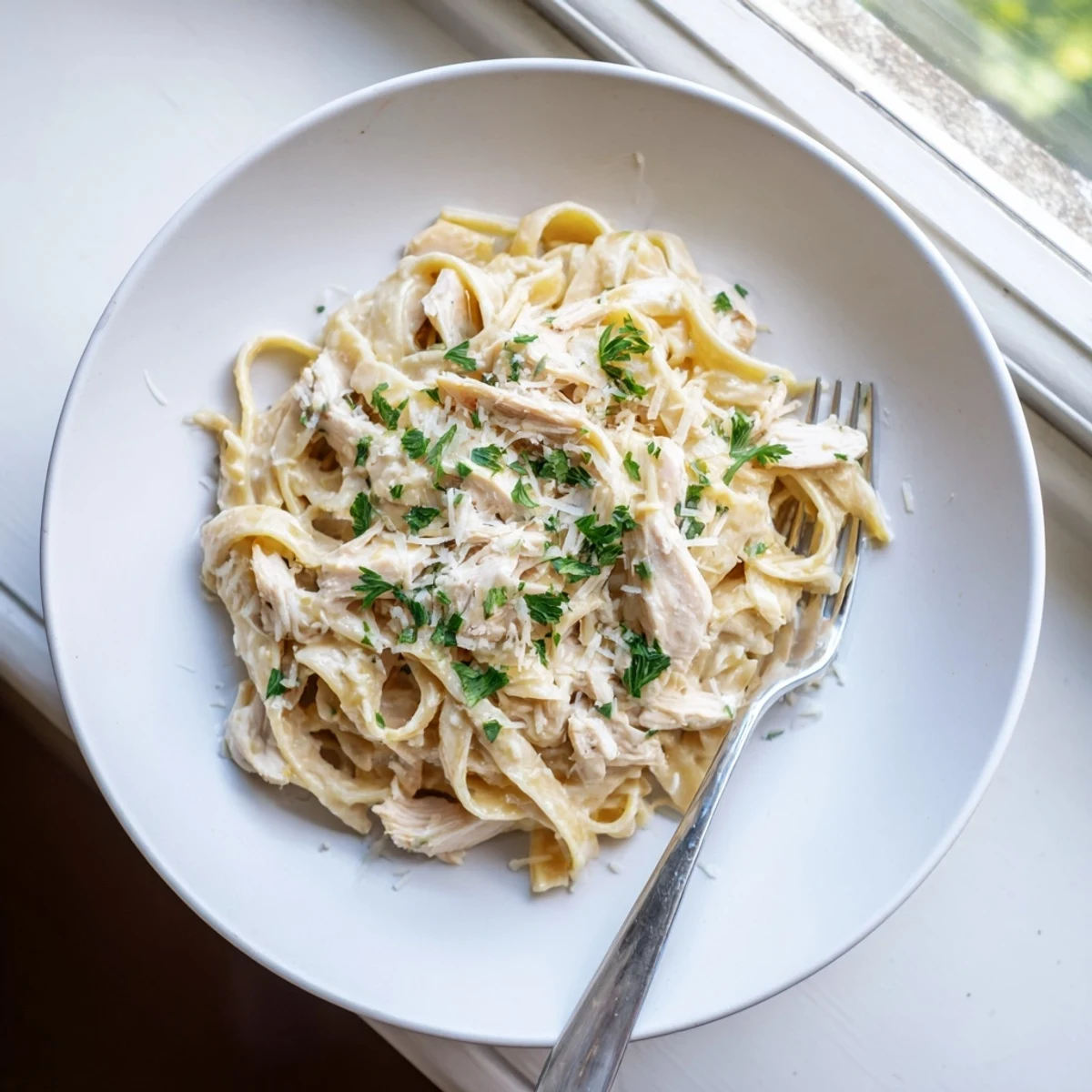
 There is something deeply satisfying about a recipe that rewards you so generously for such minimal effort. I hope this becomes one of those meals your family asks for again and again.
Recipe FAQs
- → Can I use chicken thighs instead of breasts?
-
Boneless skinless chicken thighs work beautifully and often stay juicier through longer cooking times. Adjust the cooking time slightly—thighs typically reach tenderness around 3-4 hours on low.
- → Will the pasta become mushy?
-
Adding uncooked pasta during the last 25-35 minutes prevents overcooking. The starch actually helps thicken the sauce naturally. Check for doneness at the 25-minute mark and stop as soon as it reaches al dente.
- → Can I make this lighter?
-
Substitute half-and-half for some of the heavy cream, though the sauce will be less rich. You can also reduce the cream cheese slightly, but this affects the velvety texture that defines this dish.
- → Why shred the chicken before adding pasta?
-
Shredding creates more surface area for the sauce to cling to, and distributes protein evenly throughout every bite. Whole breasts might not absorb as much flavor or integrate as seamlessly with the pasta.
- → Can I freeze leftovers?
-
Cream-based sauces can separate when frozen and reheated. If freezing, do so without the pasta—cook fresh fettuccine when reheating, and stir in a splash of cream to restore silkiness.
- → What vegetables add well to this?
-
Steamed broccoli, peas, or spinach fold in beautifully during the final minutes. Sautéed mushrooms or sun-dried tomatoes also complement the rich flavors without overwhelming the dish.